.6bf80210e65540d190971c9eaea5a122.webp)
What You Need to Know About the Difference Between Allergies, the Flu, and COVID
Not sure whether you’re dealing with the flu or allergies, or COVID? This guide breaks down the key differences.
Allergies, the flu, and COVID-19 are very different conditions, but they can share similar symptoms. Allergies tend to follow seasonal patterns and environmental triggers, while the flu and COVID-19 are contagious viruses that spread from person to person. Understanding the symptoms of each can help you get a better sense of what might be affecting you.
It’s no fun to feel sick and get sidelined by an illness, and depending on the season, you may be wondering what’s causing your symptoms. If a runny or stuffy nose, body aches, or sore throat have got you down, the flu or respiratory allergies, or even COVID-19 could be to blame. Read on to learn more about the differences between these three ailments.
What Are Allergies?
Let’s start with what is an allergen – an allergen is a usually harmless1 substance that triggers an allergic reaction in some people. If you have an allergy to a particular substance, your immune system steps in to protect you by initiating certain symptoms designed to let you know that a particular substance is an allergen.2
They can be caused by tree or grass pollen, dust mites in the home, certain foods (peanuts, milk, or eggs, for example), animal dander, bee or wasp stings, or even some medications.1
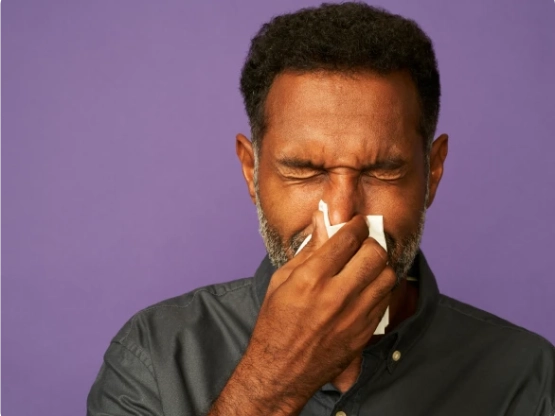
Some typical allergy symptoms can include sneezing or running nose.
What Is the Flu?
The flu is a respiratory illness that’s caused by a virus, which can affect the nose and lungs, in some cases. It can often be prevented by getting an annual flu shot, and it’s important to remember that it is contagious.3
The flu is caused by something called the influenza virus4. It’s transmitted mainly by microscopic droplets suspended in the air, so you can get the flu if a person infected with the virus coughs or sneezes near you. Virus droplets can also land on objects you touch every day, so, handling something like a doorknob or a pen, and then touching your mouth or eyes, can make it easier for the virus to make its way into your body.4
Most of us have experienced the flu in our lifetimes, so some of these symptoms will seem familiar, including:
- Body aches
- Chills
- Dizziness
- A flushed face
- Headache
- Lack of energy
- Nausea and vomiting.5
But keep in mind that a fever is often the first symptom of the flu, and that will appear as a temperature of anywhere between 102°F (39°C) and 106°F (41°C).
What Is COVID-19?
Well, we’ve all heard plenty about COVID-19, but essentially, it’s a contagious disease that’s caused by the SARS-CoV-2 virus.6
The SARS-CoV-2 virus spreads in part due to small liquid particle droplets that are dispersed when an infected person talks, coughs, sneezes, sings, or even breathes.6
The most common symptoms include fever, cough, fatigue, headache, and loss of taste or smell.3
Other, less common symptoms include:
- sore throat
- aches and pains
- diarrhea
- a rash on skin, or discoloration of fingers or toes
- red or irritated eyes.3
What Are the Key Differences Between Allergies, the Flu, and COVID?
There are a lot of overlapping symptoms between allergies, the flu, and COVID-19. Some of the main shared symptoms of these three issues include sore throat, runny or stuffy nose, and cough.7 However, allergies do not cause fever, whereas the flu and COVID-19 can.
The main difference between allergies and the flu and COVID, though, is that allergies are not contagious.8
It’s important to remember that one issue doesn’t lead to another, so you won’t catch COVID-19 from the flu or allergies. Similarly, you won’t find your allergies turning into the flu, either.9
How Do You Diagnose Allergies?
The best way to diagnose allergies is by using skin or blood testing. Your doctor can refer you to an allergist who can provide this type of testing2, which can include testing for asthma.
When it comes to COVID-19, diagnosis can come from your healthcare provider, who may take a nasal or throat swab. Or, there are home tests you can get from your pharmacist, which are known as antigen tests. You may already be familiar with these types of home tests that involve nasal testing.
If you’re suffering from some of the symptoms described above, like aches, sore throat, or runny or stuffy nose, it may be the flu. If you’re concerned about your symptoms, you can visit your healthcare provider for a test called RIDT, which stands for rapid influenza diagnostic test, or something called a rapid molecular assay (another type of diagnostic test). Both of these can detect the influenza virus in a matter of minutes, but the rapid molecular assay is thought to be more accurate.10
What Are Some Preventive Measures for Allergies?
With your doctor’s help, you can determine what environmental factor is causing your allergies in the first place. From there, you have several options available over the counter including, antihistamines like non-drowsy Allegra Allergy, intranasal steroids, or even nasal solutions.
When it comes to allergies to dust and dust mites, try introducing a dehumidifier into your home, wash your bedding often, and vacuum carpeting and upholstery often.11 And, for pollen allergies, it can be handy to consult a weather forecasting site or app to keep an eye on the daily pollen count and air quality index in your area.
And, another very common source of allergies is your beloved household pet. Vacuuming your home regularly, keeping your pet clean and washed, and adding an air filtration system to your home can all help keep allergies at bay when you share your home with a dog or cat. 11
When Should You Consult a Doctor for Children’s Allergies?
If you’re concerned about the possibility of your child suffering from allergies, it’s important that you bring this up with your little one’s pediatrician. He or she may refer you to an allergist or an immunologist to help get to the root of what’s causing your child’s allergies and how to help. Allergies are often hereditary, so if you or your partner suffer from a particular type of allergy, it’s not unlikely that your child will, as well.12
Frequently Asked Questions
Am I sick, or is it allergies?
Consult your doctor to pinpoint exactly what you're suffering from and help you develop a plan to manage your symptoms. That said, there are a few symptoms that can signify a difference between allergies and the flu. These include itchy or watery eyes, which are more common with allergies and generally not associated with other illnesses.13 The other key indicator that may help tell the difference is the duration of your symptoms. Flus last for around two weeks at the most, while allergy symptoms can last for as long as you’re exposed to the triggers – for seasonal allergies, this can be as long as 6 weeks during high-pollen seasons.13 If your symptoms persist or are severe, please consult with your doctor to determine the best course of action.
Can allergies feel like the flu?
There are some overlapping symptoms, yes. Specifically, both allergies and the flu can affect the respiratory system, so your breathing can be impacted. Stuffy or runny nose, sore throat, cough, and fatigue are all symptoms that can sometimes be present with allergies or the flu. 13
Can allergies make me feel sick and achy?
Yes, and no. Generally, allergies shouldn’t make you feel sick or achy in the same way that the flu does. But allergies can cause symptoms like headaches and sinus pain. 13 As always, your doctor is the best person to help you figure out what’s going on and determine a plan to help you feel better.
Outro
We all try our best to stay healthy year-round, but sometimes illnesses or allergic reactions happen. It’s best to be knowledgeable about the differences between things like allergies, the flu, and COVID-19 so that when you’re not feeling your best, you can act quickly to feel better and avoid sharing your sickness with others.
Find your Allegra®
.2026-02-20-10-52-19.svg)
Related Articles


References
1 National Health Service (NHS). “Allergies.” NHS.
2American Academy of Allergy, Asthma & Immunology (AAAAI). “Allergen Defined.” AAAAI.
3Centers for Disease Control and Prevention. “Key Facts About Influenza (Flu).” CDC.
4Boktor SW, Hafner JW. Influenza. 2023 Jan 23. In: StatPearls [Internet]. Treasure Island (FL): StatPearls Publishing; 2024 Jan–. PMID: 29083802.
5 Moghadami, Mohsen. “A Narrative Review of Influenza: A Seasonal and Pandemic Disease.” Iranian Journal of Medical Sciences 42, no. 1 (2017): 2–13.
6World Health Organization (WHO). “Coronavirus Disease (COVID-19).” World Health Organization.
7National Institutes of Health. “Is It Flu, COVID-19, Allergies, or a Cold?” NIH News in Health, January 2022.
8Centers for Disease Control and Prevention. “Flu vs. COVID-19.” CDC.
9Centers for Disease Control and Prevention. “Flu Testing.” CDC.
10 Frontiers in Pediatrics. “Allergen Avoidance in Allergic Asthma.” National Center for Biotechnology Information. May 10, 2017.
11American Academy of Allergy, Asthma & Immunology (AAAAI). “Prevention of Allergies and Asthma in Children.” AAAAI.
12 National Institutes of Health. “Cold, Flu, or Allergy?” NIH News in Health, October 2014.
*Among OTC oral antihistamines.