.8e642f740cc263a4c8fa1bc892c924df.webp)
6 Misconceptions about Allergies
Your guide to understanding what’s true (and not so true) about allergies.
Allergies come with plenty of misinformation, but understanding what’s true can make managing symptoms much easier. By breaking down these common myths, you can get a clearer picture of how allergies really work and what actually triggers them.
There are many tall tales out in the world about allergies, like ingesting local honey to manage your pollen allergies. We want to sort through some of the common misconceptions about allergies and debunk them, or at least paint a more accurate picture behind them. Although some are untrue, others have an element of truth, but not as you’d think. So, let’s dive in and dispel these ten misconceptions about allergies.
We All Have Allergies
It may seem like everyone has allergies these days, and although allergies are certainly common, the reality is that not everyone has an allergy or intolerance. According to the Centers for Disease Control and Prevention (CDC), in the US, nearly 1 in 3 adults and 1 in 4 children has some seasonal allergy, food allergy, or a condition like eczema1. That’s more than 100 million people in the US, making allergies the sixth leading cause of chronic illness.2
1. New Allergies Don’t Develop in Adults
There seems to be a common misconception that if you didn’t have an allergy as a child, you won’t have it as an adult, but that’s not quite true. When it comes to food allergies, about half of adults in the US with a food allergy developed at least one of their allergies as a grown-up. Shellfish is a common allergen that tends to show up in adulthood.3
You can develop allergic symptoms at any point in your life, even if you did not present them before, but it’s unclear why this happens. Seasonal allergies, like those triggered by pollen, ragweed, and other plants, tend to be adult-onset, and some pet allergies may develop later in life.4
2. Local Honey Helps with Seasonal Allergies
You may have heard that eating local honey can nip your pollen allergy in the bud, but we’re sorry to say this is a myth. One reason is that bees gather pollen from plants that are not responsible for allergens — from trees, grasses, and weeds rather than flowers — so very few pollen allergens get into honey. And, even if bees were to make honey from this type of pollen, they mix it with enzymes to start digesting the pollen and turn it into honey, which transforms the protein in the pollen, so it’s not really present in the honey.5
3. Cut Flowers Cause Allergies
If you have allergies, can you keep a bouquet of flowers in your house? The good news is that freshly cut flowers are unlikely to trigger allergies! To understand why, it’s important to look in more detail at the types of plants that cause allergies.
Pollen is essentially what fertilizes other plants to produce fruit or seeds, so it’s important to note that it can spread between plants. This can happen in two ways: Via insects like bees, or it can be carried on the wind. The pollen most people are allergic to is the wind pollinator type, which tends to be much smaller in size, dry, and get carried on the wind (making it easier to get into our lungs and eyes). The pollen that comes from colorful and fragrant flowers is heavier, waxy, and won’t get carried far by the wind, but it is meant to stick to the legs of insects like bees. That’s why a bouquet of freshly cut flowers in your home is unlikely to set off the sniffles unless you plan to decorate your table with ragweed.6
4. You Don’t Need Meds If You’re Exposed Enough
Some think that if you get exposed to an allergen enough, that will cure you of the allergy. This is not true. You can, however, diminish the symptoms of an allergy by getting allergen immunotherapy, which is a prescription-only treatment only available if your doctor recommends it.7 This is a type of therapy that involves increasing doses of an allergen in incremental doses — often in the form of an injection, but it can also be administered under the tongue in the form of a tablet — helping the person become less sensitive to the allergen. This is done by “blocking” the antibody related to that allergen to help reduce inflammation and flare-ups.8 Otherwise, no matter how many times you’re exposed to an allergen, you’re bound to get a reaction, so you will need to take medication to deal with the symptoms or avoid exposure to the allergen.
5. You Can Become Immune to Mold
As mentioned earlier, exposure to an allergen won’t cure your allergy. When it comes to mold, being exposed to it won’t make the allergy go away and could actually lead to other health problems.
Those exposed to mold regularly can experience adverse health effects, such as conditions affecting the respiratory system, chronic fatigue, muscle or joint pain, or even cognitive problems and anxiety9.
If you have mold at home, deal with it as soon as possible. If there is mold due to dampness, get that treated, and maybe invest in an HEPA filter to get rid of the spores.
6. You Can Wash Pollen Off Trees
There is a rumor that you can just take a hose to your trees and wash the pollen off. Unfortunately, this isn’t entirely useful, because the pollen would already be in the air. It’s much more realistic to maintain your garden properly, like pruning back the branches to reduce pollen (much more effective than hosing it down), and take personal protective measures against pollen. You can also replace trees with those less likely to trigger allergies like apple, cherry, or pine.10
Outro
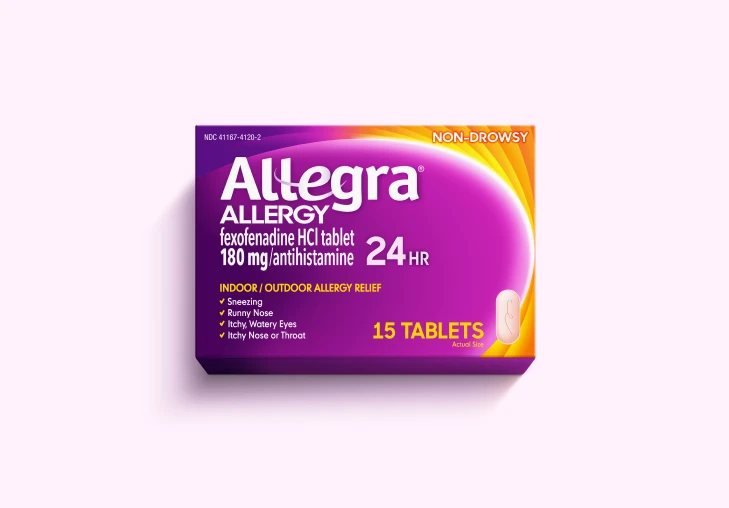
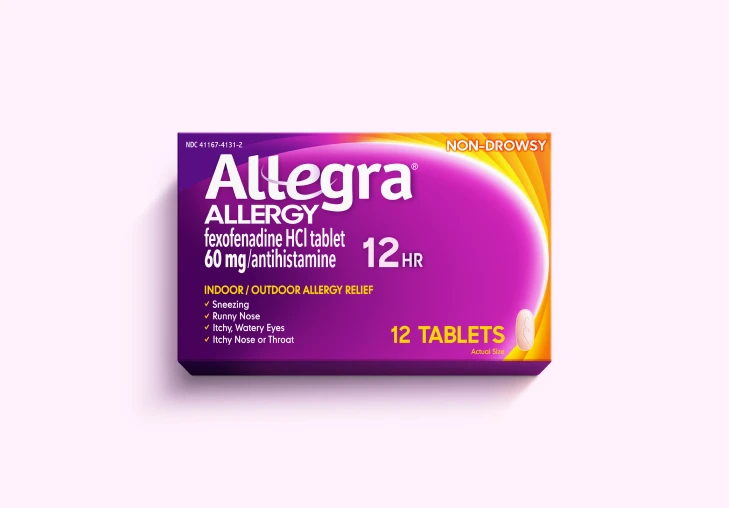
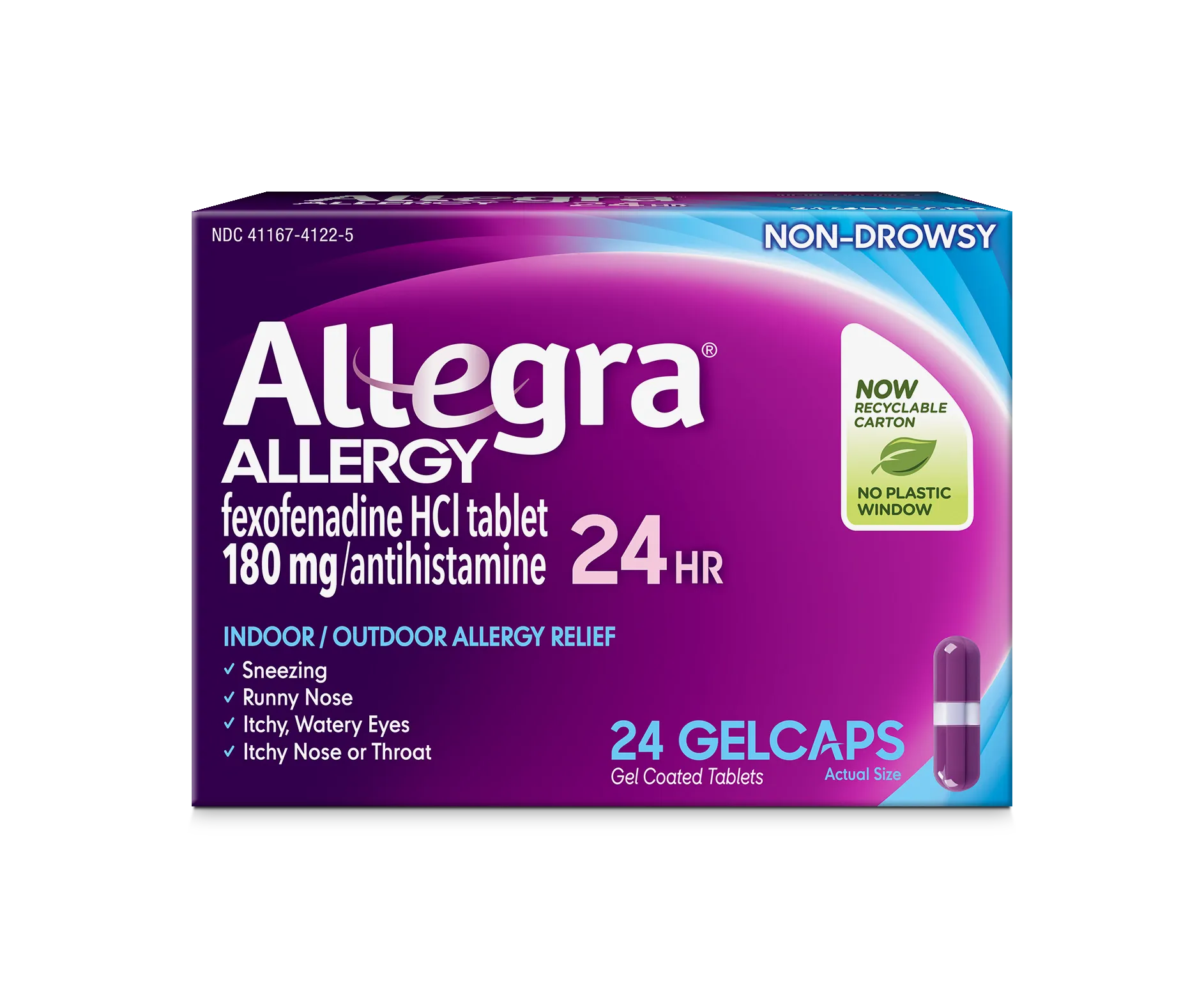
As we’ve seen, a few misconceptions are completely out there, and a few others are simply misunderstood. So, don’t worry about bringing cut flowers into your house, and you always have the option of non-drowsy antihistamines like Allegra to help relieve your allergy symptoms.
Find your Allegra®
.2026-02-20-10-52-19.svg)
Related Articles

.2025-10-29-10-21-00.webp)
.2026-04-13-07-03-02.webp)
References
1 National Center for Health Statistics (NCHS). “Press Release: New Data on Allergies and Related Conditions.” Centers for Disease Control and Prevention (CDC). January 26, 2022.
2 Asthma and Allergy Foundation of America (AAFA). “Allergy Facts.” AAFA. November 21, 2023.
3 Sicherer, Scott H., Christopher M. Warren, Chitra Dant, Ruchi S. Gupta, and Kari C. Nadeau. “Food Allergy from Infancy Through Adulthood.” *Journal of Allergy and Clinical Immunology: In Practice* 8, no. 6 (June 2020): 1854–1864.
4 Healthline Media. “Can You Develop Allergies?” Healthline.
5 Asthma and Allergy Foundation of America (AAFA). “AAFA Explains: Can Honey Help My Seasonal Allergies?” AAFA Community.
6 American Academy of Allergy, Asthma & Immunology (AAAAI). “Landscape Plant Selection Criteria for the Allergic Patient.” AAAAI. August 2019.
7 Allergy & Anaphylaxis Australia. “Common Myths About Allergy and Asthma Exposed.” Allergy & Anaphylaxis Australia.
8 American College of Allergy, Asthma & Immunology (ACAAI). “Allergy Immunotherapy.” ACAAI.
9 Harding, C. F., C. L. Pytte, K. G. Page, K. J. Ryberg, E. Normand, G. J. Remigio, R. A. DeStefano, D. B. Morris, J. Voronina, A. Lopez, L. A. Stalbow, E. P. Williams, and N. Abreu. “Mold Inhalation Causes Innate Immune Activation, Neural, Cognitive and Emotional Dysfunction.” Brain, Behavior, and Immunity. 87 (July 2020): 218–228.
10 WebMD. “Tree Pollen Allergy.” WebMD.