
Allergy Medicine for Adults: A Practical Guide
Understand how common allergy medicines work, the main over-the-counter options available, and factors to consider when choosing an option for your symptoms.
Sneezing that will not stop, a runny nose and itchy eyes are common allergy symptoms. With many products available, understanding how the main medicine types differ may make it easier to identify an option suited to your symptoms.
Allergy medicine is not a single product category. Different medicines work in different ways, and understanding those differences can help when comparing available options.
How Allergy Medicine Works: The Histamine Mechanism
Many allergy medicines work by targeting the effects of histamine, a chemical released by the body during an allergic reaction.
Allergies occur when the immune system reacts to generally harmless substances such as pollen, dust or pet dander. This immune response can lead to symptoms affecting the nose, eyes and throat.
What Histamine Does During an Allergic Reaction
When the immune system encounters an allergen, it may release histamine into surrounding tissues. Histamine contributes to several familiar allergy symptoms:1
- Sneezing
- Nasal congestion
- A runny nose
- Itching of the nose, throat or eyes
Many allergy medicines work by reducing the effects of histamine and may therefore help relieve symptoms such as sneezing, a runny nose and itching.
The Four Main Types of OTC Allergy Medicine
Common over-the-counter allergy medicines generally fall into four categories: antihistamines, decongestants, nasal sprays and combination products. Each works differently, so the appropriate choice depends on the symptoms experienced and the product label.
| Drug type | How it works | Commonly used for | Onset | Duration |
| Antihistamines | Counter the effects of histamine | Sneezing, runny nose, itching, and itchy or watery eyes | Varies; often within an hour | Varies; some products provide up to 24-hour relief |
| Decongestants | Reduce swelling of blood vessels in the nasal passages | Nasal congestion and sinus pressure | Varies by oral or nasal form
|
Varies by product |
| Nasal sprays | Deliver treatment directly to the nasal passages | Congestion, inflammation and other nasal symptoms | Varies by type; some require consistent use | Varies by type |
| Combination products | Combine more than one active ingredient | Multiple symptoms, such as congestion with sneezing or itching | Depends on the ingredients | Depends on the ingredients |
Antihistamines
Antihistamines counter the effects of histamine, which contributes to sneezing, itching and a runny nose during an allergic reaction.1
Older, first-generation antihistamines generally cause drowsiness. The newer, second generation
options are less sedating, but some of them can still cause drowsiness. Always follow the product label, particularly before driving or operating machinery.
Allegra (fexofenadine) is a non-drowsy antihistamine indicated for relief of allergy symptoms such as sneezing, a runny nose, itchy or watery eyes, and an itchy nose or throat. Use the product only as directed on the label.1
Decongestants
Decongestants reduce swelling of blood vessels in the nasal passages and may help relieve nasal congestion or sinus pressure.1
They are available in oral and nasal forms. Decongestant nasal sprays are intended for short-term use because prolonged use may worsen congestion. Follow the directions and duration of use stated on the product label.1
Nasal Sprays
Nasal sprays act within the nasal passages, but different types work in different ways:1
- Steroid nasal sprays. may reduce nasal inflammation and help manage congestion, sneezing and a runny nose. They may take time to reach their full effect.
- Saline sprays. rinse and moisturize the nasal passages and should be used according to product instructions.
- Nasal antihistamine spray. may provide short-term congestion relief but are not intended for extended use.
Because nasal sprays act locally, they may be useful when congestion or nasal irritation is a main symptom. Selection and use should follow the product label.
Combination Products
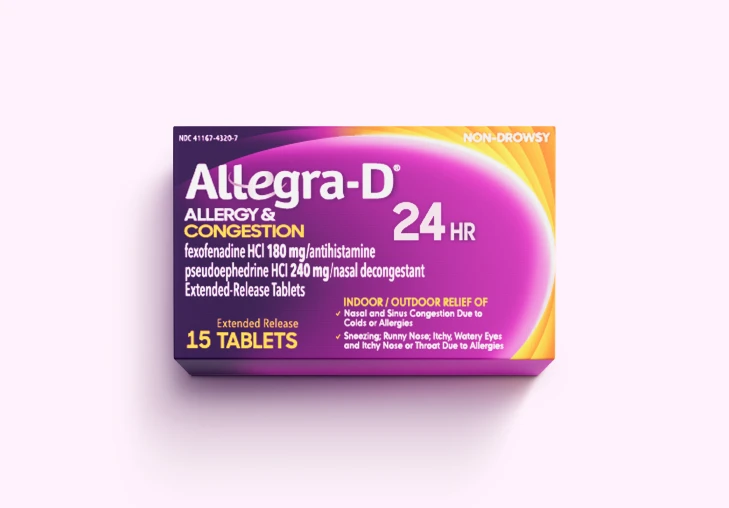
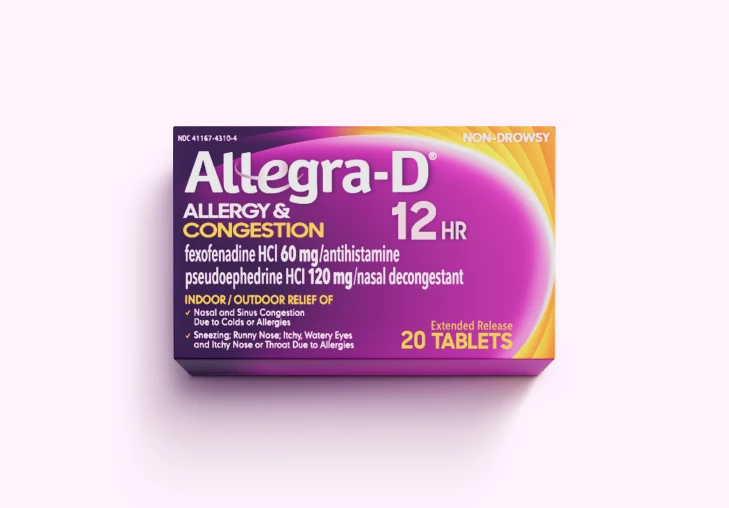
Combination products contain more than one active ingredient, commonly an antihistamine and a decongestant, to address multiple symptoms.
Check the label carefully to avoid taking another medicine containing the same active ingredient. A pharmacist or doctor can advise if you are unsure whether a combination is appropriate for you.
How to Choose and When to See an Allergist
Choosing an over-the-counter allergy medicine involves matching the product to your symptoms, reviewing the active ingredients, and following all label directions and warnings.
Reading an OTC Label
Before using an over-the-counter allergy medicine, check:
- Active ingredient. Identifies the medicine type and helps prevent duplication.
- Drowsiness warning. Indicates whether the product may affect alertness.
- Duration. Shows how often the product should be taken and how long its effects are expected to last.
- Directions and warnings. Provide dosing instructions, limitations and relevant precautions.
Reviewing these details may help you select an option that better matches your symptoms and circumstances.
Can You Take Allergy Medicine Every Day?
Some non-drowsy second-generation antihistamines are intended for regular use during allergy season. However, suitability and dosing depend on the individual product and person.
Follow the product label. Speak with a doctor or pharmacist before extended daily use, particularly if you have other health conditions or take other medicines.
Is It Safe to Mix Different Types of Allergy Medicine?
Whether different allergy medicines can be used together depends on their active ingredients. Some products already combine ingredients, while using multiple products may unintentionally duplicate an ingredient.
Read each label carefully and consult a pharmacist or doctor before combining products if you are uncertain.
When OTC Options Are Not Enough
Professional advice may be appropriate when symptoms are not adequately controlled with over-the-counter options.
Consider seeing an allergist or another healthcare professional if:
- Your symptoms are not well controlled by over-the-counter options.
- Your allergies significantly affect your quality of life, work or sleep.2
- You would like allergy testing to help identify possible triggers.
- Your symptoms are severe, persistent or worsening.
A healthcare professional can assess your symptoms, help identify possible triggers and recommend an approach suited to your situation.
Disclaimer:
Partially Al-generated before human review and editing. Image is AI generated including performer.
MAT-US-2610226_2026
Frequently Asked Questions
What Is the Best Allergy Medicine for Adults?
There is no single option that is best for everyone. The choice depends on the symptoms experienced, active ingredients, individual circumstances and product directions.
Can You Take Allergy Medicine Every Day?
Some products are intended for regular use during allergy season, but suitability and dosing vary. Follow the label and speak with a doctor or pharmacist before extended daily use.
How Fast Does Allergy Medicine Work?
Onset varies by medicine type and product. Some oral antihistamines may begin working within within an hour, while some steroid nasal sprays may take longer to reach their full effect. Check the label for product-specific information.
What Is the Difference Between an Antihistamine and a Decongestant?
An antihistamine counters the effects of histamine and may help symptoms such as sneezing, itching and a runny nose. A decongestant reduces swelling in the nasal passages and targets congestion.
When Should I See an Allergist Instead of Using OTC Medicine?
Seek professional advice if symptoms are not well controlled, significantly affect quality of life or sleep, are severe or worsening, or if you would like testing to help identify triggers.
Is It Safe to Mix Different Types of Allergy Medicine?
It depends on the active ingredients. Read every label to avoid duplication and consult a pharmacist or doctor if you are unsure about combining products.
Understanding the main allergy medicine categories may make available options easier to compare. Match the product to your symptoms, review the active ingredients and warnings, and follow the label. Consult a healthcare professional for persistent, severe or worsening symptoms.
Related Articles




Find your Allegra®
Referencias
- American College of Allergy, Asthma & Immunology. Allergic rhinitis. ACAAI. Accessed 2026. https://acaai.org/allergies/allergic-rhinitis
- Léger D, Annesi-Maesano I, Carat F, et al. Allergic rhinitis and its consequences on quality of sleep: an unexplored area. Arch Intern Med. 2006;166(16):1744-1748.