
How to relieve sinus pressure
- Adult
- Treatment
Creation: Nov 6, 2026
Last update: Nov 6, 2026
Why sinus pressure builds
Sinus anatomy in plain language
Your sinuses are air-filled spaces in the bones around your nose, cheeks, and eyes. When the inside of your nose becomes swollen, it can produce more mucus and affect the small passages that drain your sinuses, eyes, and ears. This swelling and poor drainage may cause facial pressure, although facial pain or pressure can have other causes.1, 2
Common contributors
Allergies. Allergic rhinitis, also called nasal allergies, happens when an allergen triggers swelling inside the nose. Common symptoms include a blocked or runny nose, sneezing, and itching. The swelling and extra mucus can affect the nearby drainage passages.1, 2
Viral infections. Colds and other viral infections can cause swelling, congestion, and extra mucus in the nose. These symptoms usually improve on their own.1
Physical blockage. A bent wall inside the nose, called a deviated septum, or swollen tissue inside the nose can cause a lasting blockage or prevent nasal medicines from reaching the right area. A healthcare professional may check for these problems if symptoms continue despite treatment.1
Evidence-supported relief options
Saline irrigation
Rinsing the nose with saline may help reduce nasal-allergy symptoms by clearing the nasal passages. The research suggests it may help, although the evidence is limited because the studies were small and used different methods. Follow the instructions supplied with the rinsing device.1
When medicine may help
What each type of medicine does
A decongestant nasal spray can provide short-term relief from a blocked nose. When used on its own, it should generally not be used for more than three days because it can make congestion return or worsen.1, 2
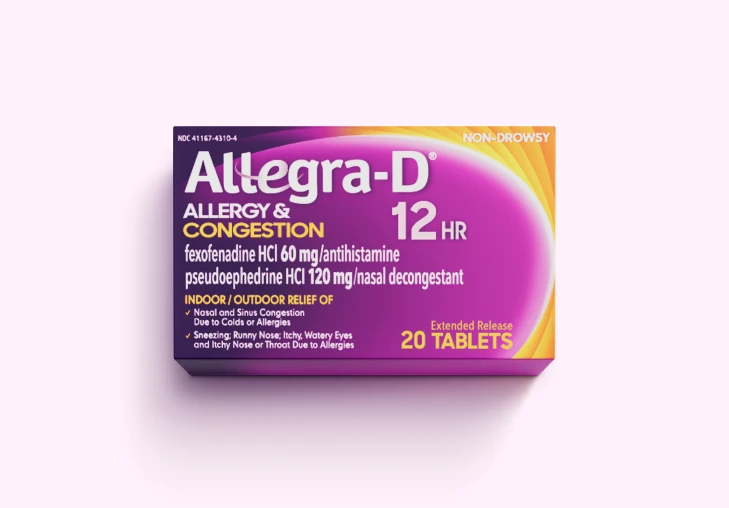
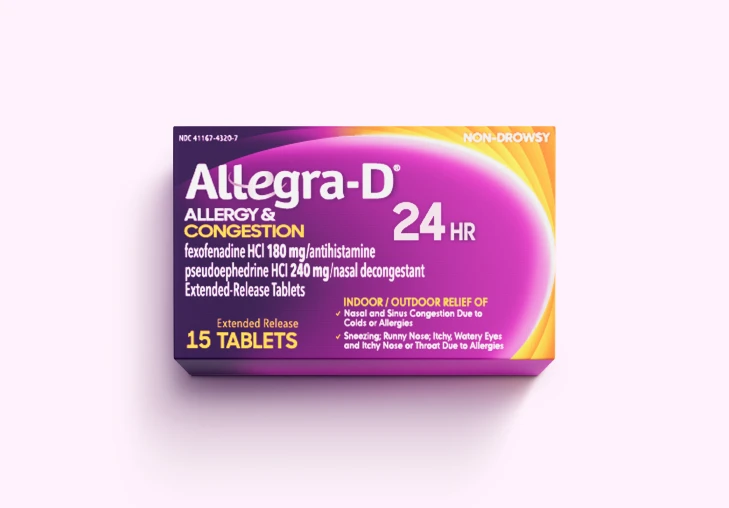
When allergy symptoms also come with a blocked nose or sinus pressure, Allegra-D® can help provide relief. It combines fexofenadine, an antihistamine that helps ease allergy symptoms, with pseudoephedrine, a decongestant that helps relieve nasal and sinus congestion and pressure.3, 4 Studies have also shown that this combination can help relieve seasonal allergy symptoms, including nasal congestion.5, 6
A steroid nasal spray works directly on swelling inside the nose and is generally more effective than an oral antihistamine for a blocked nose. It is strongly recommended when nasal-allergy symptoms affect daily life. Taking an oral antihistamine with a steroid nasal spray does not always provide extra relief, so treatment should depend on your symptoms, how severe they are, how you respond, and your preferences.1, 2, 7
Always use medicines as directed on the label. Ask a doctor or pharmacist if you are unsure which option is appropriate for you, or if symptoms continue despite treatment.
When symptoms may indicate bacterial infection
You may need medical advice if any of the following happens:
Symptoms persist for more than 10 days without improvement.1
Symptoms initially improve and then worsen.1
Symptoms are severe, such as thick, pus-like nasal discharge with a high fever.1
These signs may suggest a bacterial infection, but they do not prove that one is present. A healthcare professional should decide whether antibiotics or another treatment is needed. Seek medical advice sooner if symptoms are severe or getting worse. Symptoms on only one side of the nose, a severe headache, loss of smell, or nosebleeds may have another cause and should be checked.2
DISCLAIMER:
Partially AI-generated before human review and editing. Image is AI generated including performer
FAQs
What is a reasonable first self-care step?
Saline nasal rinsing is one option with supporting evidence and may help reduce nasal-allergy symptoms. Follow the device instructions and seek professional advice if symptoms are severe, getting worse, or not improving.1
Why can nasal allergies cause pressure or congestion?
When should sinus symptoms be checked for a possible bacterial infection?
A healthcare professional may suspect a bacterial infection when symptoms last for more than 10 days without improving, get better and then worsen, or are severe, such as thick, pus-like nasal discharge with a high fever. Sinus pressure alone is not a reason to start antibiotics.1
Learn more

- Adult
What Causes Hives? Triggers and Unknown Causes

- Adult
Allergy Medicine for Adults: A Practical Guide

- Seasonal
Hay Fever and Allergic Rhinitis: What It Is and How to Get Relief

- Treatment
Why Do Some Allergy Medicines Make You Drowsy
Find your product
References
- Bernstein JA, Bernstein JS, Makol R, Ward S. Allergic rhinitis: a review. JAMA. 2024;331(10):866-877. doi:10.1001/jama.2024.0530.
- Seidman MD, Gurgel RK, Lin SY, et al. Clinical practice guideline: allergic rhinitis. Otolaryngol Head Neck Surg. 2015;152(1 suppl):S1-S43. doi:10.1177/0194599814561600.
- Allegra-D® 24 Hour Allergy & Congestion [Drug Facts]. Chattem, Inc, a Sanofi company; 2020
- Allegra-D® Allergy & Congestion 12 Hour [Drug Facts]. Chattem, Inc, a Sanofi company; 2017
- Sussman GL, Mason J, Compton D, et al. The efficacy and safety of fexofenadine HCl and pseudoephedrine, alone and in combination, in seasonal allergic rhinitis. J Allergy Clin Immunol. 1999;104(1):100-106.
- Eccles R, Jawad MS, Jawad SS, Angello JT, Druce HM. Efficacy and safety of single and multiple doses of pseudoephedrine in the treatment of nasal congestion associated with common cold. Am J Rhinol. 2005;19(1):25-31.
- Brozek JL, Bousquet J, Agache I, et al. Allergic Rhinitis and its Impact on Asthma (ARIA) guidelines: 2016 revision. J Allergy Clin Immunol. 2017;140(4):950-958. doi:10.1016/j.jaci.2017.03.050.
DISCLAIMER:
Partially AI-generated before human review and editing. Image is AI generated including performer